
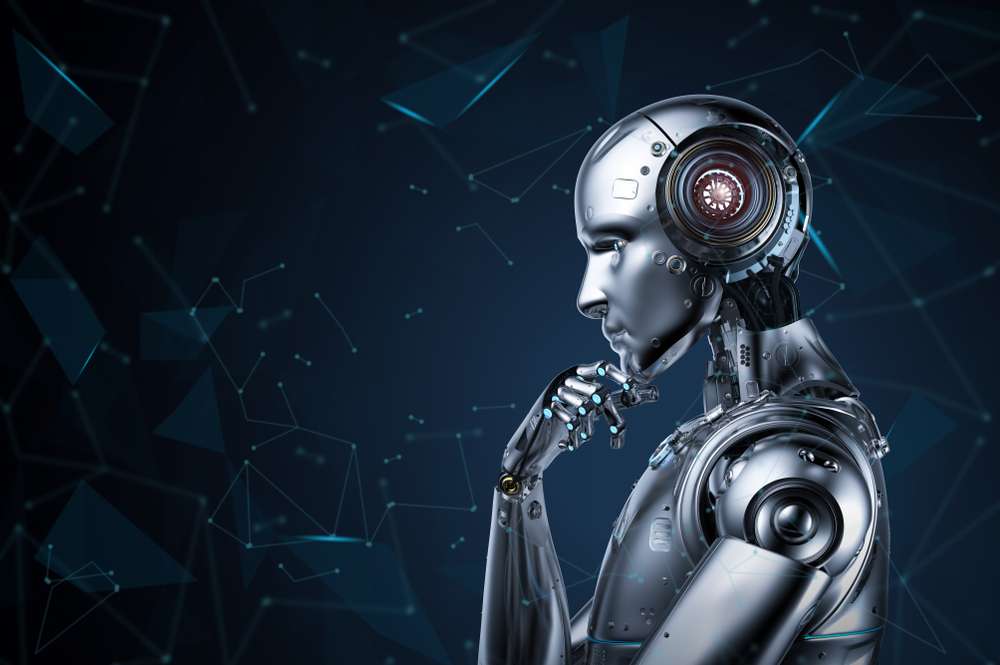

Whereas the COVID-19 pandemic has forced whole industries across the Middle East to transform their business models and digital capabilities by necessity. Those industries who develop Artificial Intelligence (AI) technologies continually aspire to use technology to augment the way we work and live, with ambitions to be faster, more efficient and more insightful.
In the world of work, AI is helping us to save time and boost productivity. From call centres, supply chains or boardrooms, our experiences have been – and continue to be – totally transformed. With Salesforce’s Einstein Voice Assistant, for example, AI can help users to navigate cloud services hands-free, to update meeting notes and records instantly. AI can also take on more routine and repetitive administrative tasks like data entry and finding critical information, in turn helping refocus time and resources on tasks and projects that humans uniquely can accomplish.
In the context of the public health crisis, companies seeking to reopen and recover their offices safely and responsibly are also implementing and repurposing AI systems; Salesforce Work.com solutions, for instance, provide a 360-degree view of return-to-work readiness, contract tracing and shift management capabilities.
Although making our lives a bit easier and more convenient, the development of automation has raised concerns around the future of jobs. Whilst the combination of the public health crisis and rapid technological advancements may decrease demand for certain task-orientated jobs, like the changing priorities and practicalities of many businesses right now, a lot of jobs will be transformed entirely. The potential for AI to create new products, services and jobs is enormous.
As the reliance on new AI technologies rise, we also have a responsibility to ensure that inequalities do not rise alongside it. Handled responsibly, AI will help us do our jobs more efficiently and live fuller lives. It may even revolutionise how societies are governed and encourage a fairer way of distributing wealth.
Complementing and creating jobs
Automation may not only complement the jobs we do, but also lead to broader levels of employment. Just as AI tools are helping sales teams prioritise leads, they’re also helping companies elevate how they interact with their customers and make better business decisions through data. This is why at Salesforce we are helping companies embrace and deploy AI. During this time of disruption, we’re seeing whole teams and roles entirely transformed.
For example, we helped Virgin Group be more responsive to its customers by helping the company launch its first-ever AI chatbot. With so much uncertainty in air travel industry, the chatbot assisted customers with making or rescheduling essential travel arrangements at the last minute. This has also enabled their workforce to concentrate on other impactful ways to support the business.
As the pandemic evolves, so too will the demands of customers and the services that businesses offer. This means companies will also need to help their employees to up-skill and possibly even re-skill entirely. In a world where companies are increasingly judged on the quality of the customer experience they provide, multi-tasking and learning in both the physical and digital spheres are imperative to engaging effectively with customers and with evolving a workforce.
Cultivating a fairer economy
By bringing technology, economists and governments together, we can also transform how we approach governance and taxation. Launched last month, Salesforce Research’s AI Economist framework, with the capability to simulate millions of years of economies in parallel, shows how economic design AI can be used to optimise the balance of productivity and social equality for everyone – a model found to be 16% more effective than any leading tax framework.
In addition to the clear, long-term positive social impact this could have, the issue of taxation will become increasingly relevant as this pandemic continues and governments seek to re-adjust fiscal policy to pay for their interventions, including massive stimulus packages. We can expect the debate around taxation, equality and productivity to intensify in the months and years ahead.
Benefiting everyone in society
During this pandemic we’re seeing AI fast-forward the process of drug discovery, revolutionise health systems with capabilities to predict service demand, and transform businesses in the context of social distancing guidelines. We are still only at the beginning of the AI journey.
There are legitimate fears around what implications automation may have on jobs and employment. At Salesforce, we have long envisioned a world in which AI will be democratised for everyone in society. To ensure everyone reaps the benefits, companies must help employees adapt to changing working environments, always to stay curious and put ethics at the forefront of everything they do in AI.
This explains why innovation and trust are two of our core values at Salesforce. We innovate because we want a better world, and we build trust to benefit everyone along the way. Robots will never share our human ambitions for a better life for themselves, their family or community, but they can help us achieve them. With data and ethics, the Middle East can become a smarter society, create more meaningful work, and cultivate a more equitable economy.








Discussion about this post